
How Can a Seat Factory Support Custom Prototype Development for Unique Projects?
Custom seating projects often involve requirements that standard products cannot fully meet. Government buildings, transport hubs, schools, and healthcare facilities may have different layouts, seating capacities, and functional needs. Before production begins, project teams need to determine whether a proposed design fits the space and supports daily use.
Working with a suitable seat company can help buyers turn these requirements into a physical sample. The factory can review drawings, assess material choices, and coordinate design changes. Prototype development also gives architects, contractors, and purchasing teams a shared reference before they approve a larger order.
Why Do Custom Seating Projects Need Prototypes
Prototype development helps project teams identify practical problems before mass production. A design may look suitable on paper but create difficulties when installed in a real space. Seat dimensions, armrest positions, aisle clearance, and folding mechanisms all affect how the finished product will function.
Physical samples allow buyers to examine these details directly. They can test the seat, review its appearance, and check whether the selected configuration fits the intended layout. Early evaluation also gives the factory a chance to address design concerns before they affect tooling or production planning.
How Should Buyers Define the Initial Requirements
Clear specifications give the factory a reliable starting point. Buyers should prepare available drawings, dimensions, material preferences, installation conditions, and expected usage requirements. Project teams should also explain which features are essential and which can be adjusted during development.
The factory can review the information and identify questions that need clarification. For example, a lecture hall may require a folding seat and an integrated writing tablet. A transport facility may place greater emphasis on access, maintenance, and efficient use of floor space. Defining these priorities helps keep the prototype aligned with the actual project.
Which Details Need Testing During Development
Material selection affects appearance, maintenance, and manufacturing methods. Plywood with a wood veneer finish may suit an auditorium that requires a natural wood appearance. Steel supports provide a structural base, while cushion shape influences back support and sitting comfort. Buyers should evaluate these components as part of the complete design.
Moving parts also require practical checks. A tip-up seat should operate within the available space, and a writing tablet should open and fold without interfering with nearby seats. Project teams can repeat these operations during sample evaluation and record any unwanted movement or handling difficulties.
Installation compatibility deserves the same attention. Buyers should confirm fixing points, row spacing, floor conditions, and access requirements with the relevant contractors. A prototype that works in the factory may still require adjustments to fit the building. Comparing the sample with installation drawings helps identify these differences before approval.
How Can Factories Manage Design Revisions
A clear revision process helps prevent misunderstandings between buyers and production teams. Each requested change should identify the affected component and explain the reason for the adjustment. The factory can then assess whether the change affects dimensions, materials, tooling, or manufacturing methods.
Sample versions should also be documented carefully. A revised armrest does not automatically mean that the finish, cushion, or leg structure has been approved. Buyers should review the updated sample against the agreed specifications and record the final decisions. This creates a consistent reference for production and quality inspection.
Why Does In-House Manufacturing Matter
Custom seating can involve mold development, metalworking, surface finishing, injection molding, foam production, and wood processing. When these operations are coordinated within an integrated manufacturing system, teams can communicate more directly about component compatibility and production requirements.
Leadcom seating has manufacturing capabilities covering multiple production processes. This approach is relevant to projects that combine metal structures, upholstered components, and wood finishes. Buyers should still confirm which processes are available for their chosen design and how the factory will coordinate sample revisions with the production schedule.
Research resources can also support prototype development. Engineering teams may review component structures, manufacturing methods, and opportunities to refine a design. Leadcom seating reports having a provincial engineering technology research and development center and more than 128+ patents. Buyers can consider this background alongside the actual sample, technical documentation, and project-specific requirements.
How Does the Arthur Lite Seat Fit Into Prototype Evaluation
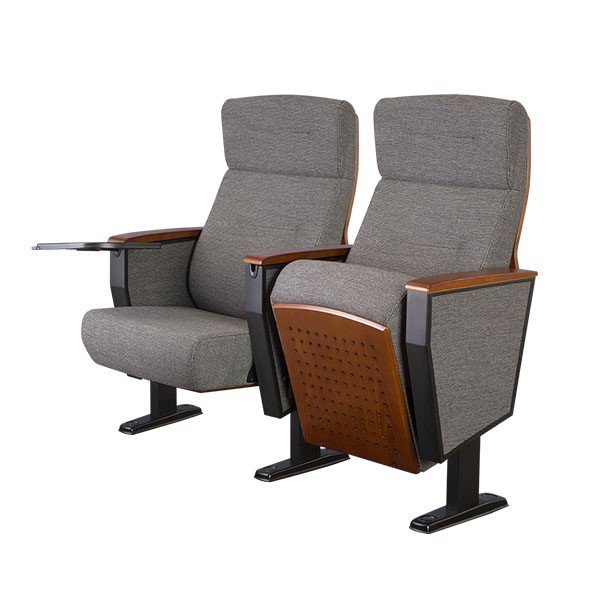
The Arthur Lite L-A02-1 provides a practical example of the details that buyers can assess. The Arthur series offers U-shaped, T-shaped, and single-pedestal leg options. Its outer back and seat pan use plywood with a wood veneer finish. The back and seat cushions have an ergonomic shape with lumbar support.
The tip-up seat mechanism uses spring and damping components. Hardwood armrests house a writing tablet that can be opened and folded. During prototype evaluation, buyers can check the selected leg configuration, inspect the finish, and test the tablet’s movement. These checks help determine whether the configuration suits the intended auditorium or lecture space.
Final approval should cover the complete selected configuration. Buyers need to confirm the leg style, finish, cushion design, writing tablet arrangement, and installation details. Any agreed modifications should appear in the final drawings or specification records so that production teams can follow the approved design.
What Happens After the Prototype Is Approved
Prototype approval marks the transition from design evaluation to production preparation. Buyers should confirm the final drawings, material specifications, sample version, and inspection requirements. Both parties should also clarify how changes will be handled if a production issue arises.
For project teams choosing a seat company, the value of prototype development lies in the connection between design intent and manufacturing execution. Clear requirements, practical testing, and documented revisions help reduce uncertainty before a larger order begins. This process gives buyers a more reliable basis for evaluating custom seating and preparing for installation.