
Microduct Fiber Optic Cable Infrastructure for Enterprise Campus Networks: How Private Network Design Differs
Enterprise campuses operate under a different set of constraints from carrier networks. A university, hospital, technology park, or corporate site may control its own buildings, pathways, security zones, and upgrade schedules, yet still need connectivity to support rapidly changing digital services.
Microduct fiber optic cable infrastructure can fit this environment because campus pathways may need to accommodate new buildings, additional fiber counts, and technology upgrades without repeated disruption to occupied facilities. Corning identifies private campus environments as one application for microtechnology and describes the approach as supporting flexibility and scalability in outside-plant networks.
Why Campus Networks Need a Different Planning Model
A private campus normally has a defined geographic boundary, but its network is rarely static. New laboratories, residence halls, production buildings, parking facilities, security systems, and connected devices can alter traffic patterns over time. Network planners consequently need to consider not only today’s backbone requirements but also how pathways can accommodate additional connections without extensive civil reconstruction.
Carrier infrastructure often emphasizes long-distance routes and broad subscriber coverage, whereas enterprise campuses must coordinate network construction with daily operations. Excavation beside a hospital, university residence, manufacturing facility, or office complex can interfere with access, traffic, utilities, and business activity. CommScope’s connected-campus guidance lists aerial, direct-buried, duct, and micro-duct installations among the available approaches, illustrating how campus routes may require different physical strategies within the same overall network.
Physical ownership also changes the investment calculation. A campus operator may control the pathway for decades and can plan spare capacity around its own expansion schedule. Instead of installing every fiber that might eventually be needed, planners can consider how much pathway capacity should exist initially and how future optical cables can be added as demand becomes clearer.
Pathway Capacity and Future Expansion
The main distinction between a conventional cable-first approach and a pathway-oriented architecture is the separation of physical access from immediate fiber demand. A microduct can divide available duct space into smaller pathways, allowing optical cables to be installed when additional capacity becomes necessary. Corning describes this model as a way to defer some capital expenditure while keeping pathways available for future growth.
Campus networks benefit from this flexibility because different buildings rarely grow at identical rates. One research center may require substantially more bandwidth after a major equipment upgrade, while another facility may remain relatively stable. Separate pathways or spare capacity can allow expansion to follow actual demand rather than forcing the entire campus to be upgraded simultaneously.
The physical dimensions of the pathway also matter. Available commercial configurations demonstrate that microduct systems can be supplied in different outside and inside diameters and in single or multi-way arrangements. Corning, for example, lists 10/8 mm, 12.7/10 mm, 14/10 mm, 16/12 mm, and other configurations for different installation environments. Such variation gives campus designers more ways to match pathway dimensions with expected cable size, route conditions, and future expansion plans.
Production Flexibility for Private Network Projects
Private networks can involve unusually varied specifications because each campus may have different route lengths, building interfaces, cable requirements, and expansion policies. The manufacturing side consequently needs to accommodate more than one standard configuration without making every order dependent on an entirely different production platform.
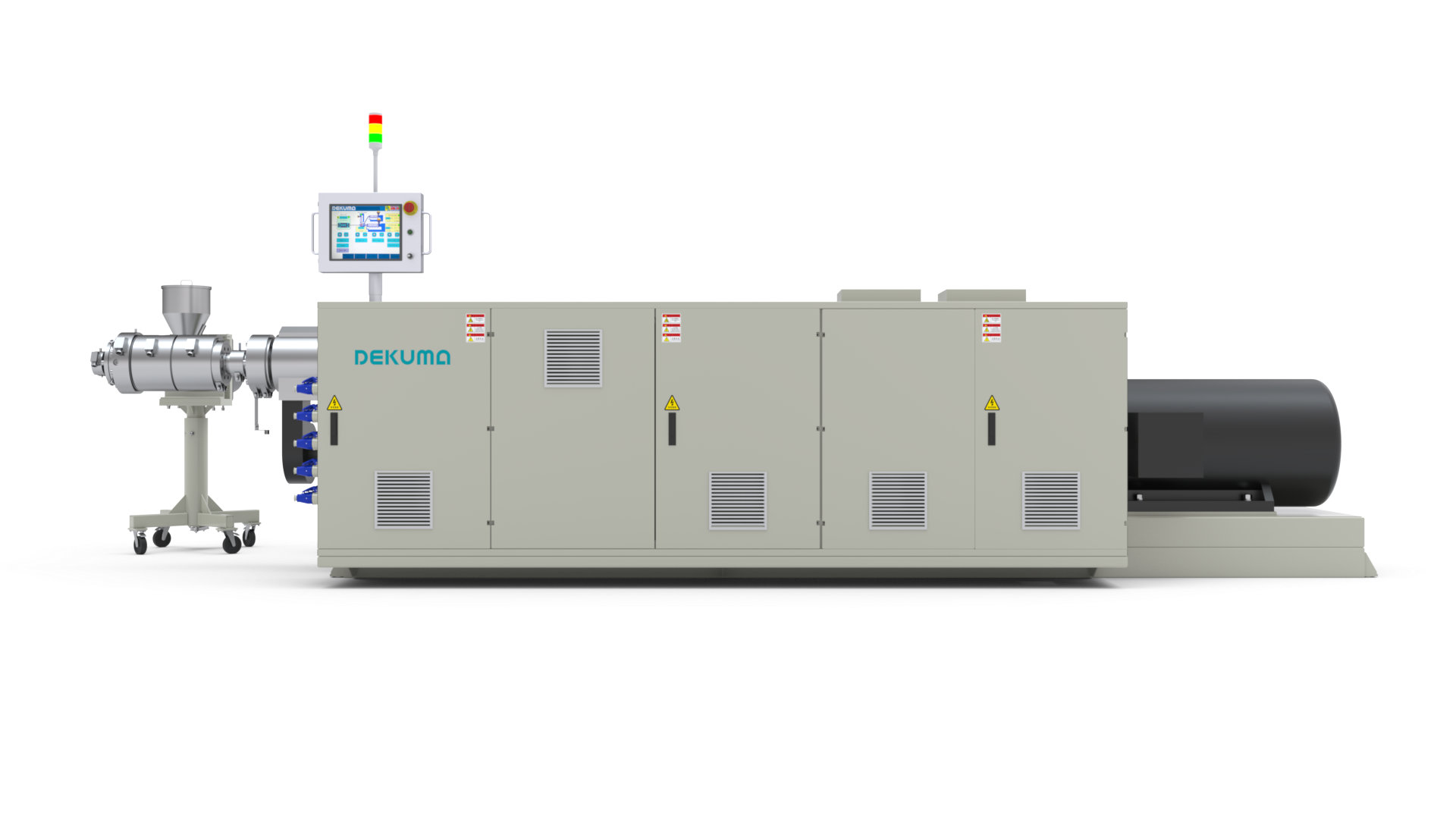
The Microduct Extrusion Line from DEKUMA is designed for cable ducts, silicone-core pipes, micro tubes, and bundles used in fiber-optic telecommunications. Its stated configuration supports two-layer or three-layer microducts and bundles, automatic line control, production speeds of at least 100 m/min, and flexible coiling arrangements; DEKUMA also notes that the line can be customized according to production requirements. This type of flexibility is relevant when private-campus projects require different pathway structures while maintaining controlled manufacturing processes.
Production adaptability can also affect project logistics. Campus construction frequently occurs in phases, with individual buildings coming online at different times. Coiling and product configuration options can support different deployment lengths and installation plans, while automated process control helps maintain consistent production conditions across repeated manufacturing batches.
Maintenance, Upgrades, and Campus Operations
Network maintenance has a different meaning when the infrastructure serves an occupied private campus. A fault affecting one building may have consequences for security systems, access control, research equipment, communications, or operational technology. Reducing the amount of physical reconstruction required during future upgrades can consequently have value beyond the direct construction budget.
A pathway-based design can separate the service life of the route from that of the optical cable installed inside it. If additional capacity is required, a new cable may be introduced through an available pathway rather than reopening an established route. Corning specifically identifies enterprise settings such as offices, hospitals, airports, and college campuses as applications where microcable and microduct approaches can support network upgrades with less operational disruption.
Long-term planning should also account for pathway records. Private campus networks may contain dozens of buildings and numerous access points, making documentation of available ducts, occupied pathways, cable types, and connection destinations increasingly important. Good asset records allow future projects to use existing physical capacity more intelligently instead of treating every expansion as a new construction exercise.
Conclusion
Private campus networking places unusual value on adaptability because the physical site, technology mix, and operational priorities can change at different speeds. Microduct fiber optic cable architecture provides one way to separate today’s connectivity requirements from tomorrow’s expansion needs, particularly where repeated excavation would interfere with an active campus.
DEKUMA develops extrusion equipment for telecommunications applications, including microduct and bundle production, while its configurable manufacturing approach corresponds with the varied specifications often encountered in private network infrastructure.