
High-Density Point-of-Load Conversion: MicroSiP Thermal Dissipation and Supply Strategy
Shrinking printed circuit board real estate forces hardware designers into a challenging engineering corner. Board-level power architectures must supply low-voltage, multi-ampere rails to dense microprocessors while keeping switching losses and localized thermal hot spots strictly under control.
Traditional discrete buck regulator designs may require external inductors, switching MOSFETs, and additional passive components, increasing PCB area and layout complexity. This footprint penalty complicates return paths, magnifies parasitic loop inductance, and injects unwanted switching noise into adjacent analog sensor circuitry.
Integrating the inductor and switching circuitry within a single MicroSiP package reduces external component requirements and simplifies PCB layout. The Texas Instruments 17V input 3A step-down MicroSiP power module exemplifies this architectural shift, condensing a complete DC-DC buck stage into an ultra-low-profile footprint to streamline complex multi-rail board layouts.
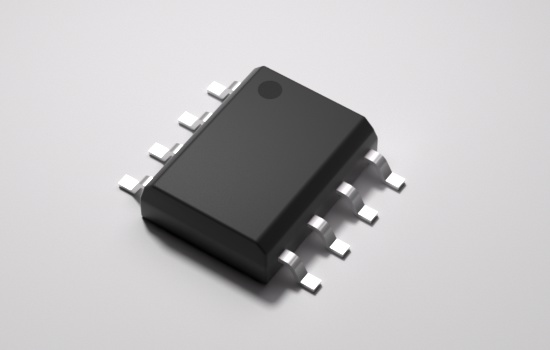
Deploying the Texas Instruments 17V Input 3A Step-Down MicroSiP Power Module in Compact Enclosures
Cataloged under part number TPS82130SILR, this device combines an integrated power inductor and a synchronous step-down converter into an eight-terminal package measuring just 3.0 mm by 2.8 mm by 1.5 mm. Such extreme physical miniaturization reduces layout complexity while preserving a low profile suited for height-constrained enclosures.
The module operates across input voltages spanning 3.0V to 17V, bridging standard 5V, 9V, and 12V intermediate supply rails down to adjustable outputs between 0.9V and 6V. Supporting continuous output currents up to 3A, it fulfills demanding digital core requirements with minimal output voltage ripple.
Underpinning the internal silicon is TI’s proprietary DCS-Control topology, which blends hysteretic voltage-mode operation with internal current feedforward. This hybrid control architecture reacts immediately to sudden load steps, recovering nominal output levels in sub-microsecond intervals without requiring an external frequency compensation network.
A nominal 2 MHz switching frequency allows design teams to pair the converter with miniature external ceramic capacitors. During light-load periods, the module transitions automatically into a power-save mode, maintaining elevated conversion efficiency and conserving battery reserves in portable industrial terminals.
Managing High-Frequency Return Paths and Localized Thermal Flux
Mounting the power inductor directly over the silicon switching die concentrates operational heat into a tiny surface footprint. Without adequate PCB-level thermal management, sustained high-current operation in unventilated enclosures can raise the module temperature and trigger thermal shutdown. The output current must be derated according to the operating temperature and thermal conditions.
To vent this concentrated heat effectively, layout engineers must stitch dense arrays of thermal vias directly beneath the component ground pads. Connecting these vias directly into solid internal copper planes disperses thermal energy across the substrate, lowering junction temperatures under heavy continuous electrical loads.
Parasitic inductance within the input power loop demands equal diligence during printed circuit board layout. Placing low-ESR ceramic input capacitors flush against the package terminals minimizes high-frequency alternating current loops, suppressing voltage spikes that can radiate electromagnetic interference across sensitive radio-frequency tracks.
Routing the analog feedback line requires complete physical isolation from noisy internal switching nodes. Running feedback traces through inner signal layers shielded between continuous ground planes prevents inductive crosstalk from destabilizing the pulse-width modulator during rapid load swings.
Mitigating Allocation Bottlenecks with an Independent Power Module Supplier
Miniaturized System-in-Package modules frequently experience lead-time volatility when industrial automation and enterprise hardware markets expand simultaneously. Because specialized multi-chip packaging requires dedicated assembly equipment, component fabricators cannot instantly expand cleanroom lines to satisfy sudden commercial order surges.
When primary factory lead times stretch unexpectedly, equipment manufacturers must activate agile procurement channels to prevent line-down emergencies. Collaborating with an established power module supplier grants purchasing managers visibility into global unallocated stock, buffering production pipelines against regional shortages and assembly disruptions.
To maintain continuous manufacturing operations, UniBetter distributes a wide range of electronic components across industrial robotics, medical diagnostics, and telecommunications infrastructure sectors. Their multi-regional distribution channels provide hardware engineering teams with dependable component options when primary factory allocation windows extend unexpectedly.
Strategic fulfillment hubs positioned across major Asian transportation centers accelerate international freight transit and customs processing. Staging safety inventory through these regional transit points avoids transit bottlenecks, keeps automated surface-mount assembly lines humming, and lowers shipping overhead for high-volume manufacturing runs.
Packaging Delamination Risks and Dry-Pack Authentication
Procuring encapsulated multi-chip modules through secondary trading channels introduces notable component reliability risks. Substandard, remarked, or mishandled devices can exhibit internal solder fatigue, cracked internal bond wires, and latent moisture-induced package delamination during high-temperature convection reflow cycles.
To eliminate counterfeit exposure in secondary supply lines, UniBetter sources and procures electronic components from franchised sources to guarantee 100% authentic, quality-assured and brand-new electronic components. Strict traceability audits confirm that every reel satisfies original factory design specifications and international environmental compliance mandates.
Verifying component integrity prior to automated surface-mount placement requires comprehensive incoming laboratory screening. Quality engineers utilize high-resolution optical microscopy, solder lead coplanarity scanning, and non-destructive X-ray analysis to confirm that internal magnetic core alignment and silicon die attachments match factory benchmarks.
Procurement teams handling the Texas Instruments 17V input 3A step-down MicroSiP power module must also enforce rigorous moisture sensitivity level handling. Verifying intact factory vacuum packaging and humidity indicator cards prevents internal delamination when components enter lead-free reflow ovens at peak temperatures.
Cost Optimization and Strategic Bill-of-Materials Planning
Controlling overall bill-of-materials costs across high-density hardware projects requires an analytical procurement framework. Purchasing departments evaluate lifecycle obsolescence risks, monitor semiconductor foundry lead times, and consolidate purchasing orders to protect corporate operating budgets against inflationary spot-market markups.
When spot-market price spikes threaten project margins, coordinating with an experienced power module supplier allows equipment builders to secure pre-allocated inventory without paying exorbitant premiums. Structured supply agreements protect working capital while establishing predictable component delivery schedules across multiple quarters.
To insulate manufacturing budgets against fluctuating component prices, electronics manufacturers rely on Unibetter to locate needed electronic components and acquire them at lower costs across shifting market cycles. This targeted procurement intelligence protects gross profit margins and keeps critical factory assembly operations running continuously.
Realizing High-Density Power Integrity in Production
Implementing integrated point-of-load converters bridges the gap between tight board real estate and demanding transient requirements. The TPS82130SILR delivers the transient responsiveness, high efficiency, and minimal footprint required by modern high-density processors and industrial embedded controllers.
However, achieving commercial success requires looking beyond schematic simulation files. Production resilience depends on coupling disciplined board-level layout rules with proactive component sourcing strategies, ensuring that specialized silicon modules remain available throughout entire product manufacturing lifecycles.
By combining rigorous thermal engineering with verified distribution partnerships, hardware manufacturers eliminate factory assembly vulnerabilities. This comprehensive methodology protects manufacturing throughput, minimizes overall production costs, and guarantees reliable hardware performance across demanding real-world operating environments.