
Feed Mill Hammer Mill: What It Is and How It Works
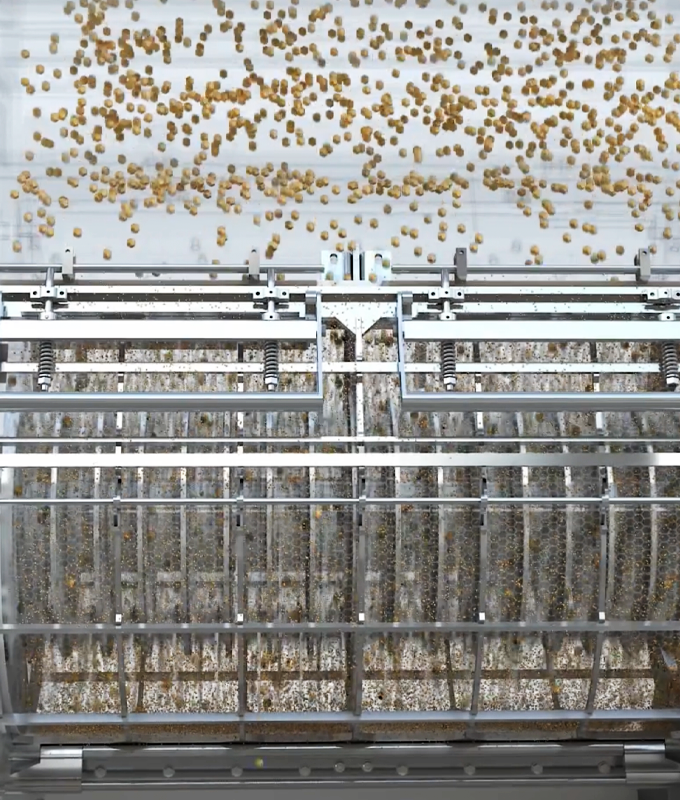
Industrial feed production requires reliable equipment to ensure consistent particle size reduction through milling grinding. At the heart of many processing lines sits the hammer mill, a machine engineered to transform raw grains into fine meal. This unit operates through mechanical impact, forcing material through a screen to reach specific dimensions. By breaking down whole grains, they create a uniform substrate that prepares ingredients for subsequent processing steps like pelleting or mixing.
Core Components and Their Functions
A typical hammer mill consists of several essential parts that work in harmony to achieve efficient milling. The process begins at the inlet, where gravity or mechanical feeders introduce raw grain into the main chamber. Once inside, the rotor—a high-speed shaft equipped with a series of swinging hammers—begins to spin. The kinetic energy generated by the rotor causes the hammers to strike the grain repeatedly. This rapid impact is the primary method of grinding within the chamber.
Positioned around the rotor is a perforated screen. This component acts as a filter; particles can only exit the chamber through the screen once they are reduced to a size smaller than the hole diameter. Below the screen is the outlet, which collects the processed material for transport to the next stage of the line. FAMSUN designs these units to ensure that the airflow and internal geometry promote a smooth path for the material, reducing heat buildup during heavy-duty operations.
Synergy Between Components
Efficiency in a roller mill or hammer mill setup depends on how these components interact. While a roller mill grinder uses compression, the hammer mill relies on high-velocity percussion. FAMSUN provides integrated systems where the interaction between the rotor speed and screen open area is calibrated to maximize throughput. When the rotor turns at optimal speeds, the hammers clear the material from the screen surface, preventing clogs. This precise mechanical design ensures that the grinding process remains stable. Regular inspection of these parts, specifically the wear patterns on the hammers and the condition of the screen, allows operators to sustain consistent milling performance over long operational cycles.
Understanding the function of each component within a hammer mill helps facilities optimize their production workflows. From the rotor and hammers to the screen, each part plays a specific role in achieving the desired particle size. Proper operation of this equipment is essential for producing high-quality feed consistently.