
The Science Underpinning Contemporary Leak Detection Technology
Despite the fact that plumbing systems have been improved significantly, water leaks remain one of homes and businesses most common and costly problems. However, the way method leaks are detected has undergone a lot of changes. Gone are the days when you could hack down walls and dig with abandon. Now, leak detection is a science, an exacting pursuit that employs advanced technology to enable specialists to locate problems quickly and precisely without causing collateral damage.
Differentiating Between The Types Of Water Leaks
In a plumbing system, water can seep through walls and ceilings, underground pipes, and even underneath concrete slabs. Many of these breaches cannot be seen with the naked eye and are therefore difficult to discover using normal scanning methods. Leak Detection in New Era Technology Modern leak detection systems are fundamentally based on the science of identifying these very minute variations in acoustics, thermal imaging, pressure & moisture content. Such differences give experts critical clues that assist them in identifying the precise source of a leak.
Technology For Finding Acoustic Leaks
One of the most popular methods used for plumbing today is acoustic leak detection. This technique operates on the basis that the sound or vibration of water leaking from a pipe is different from its surroundings. Ground services that use highly sensitive listening devices may still be able to detect these sounds if they are hidden behind walls or buried deep.
Using this technique, plumbers can distinguish between the sound of a leak and that of regular pipe noise. Simply by mapping sound patterns, they can pinpoint the exact location of the fault with phenomenal accuracy. This allows repairs to be more rapid and less obtrusive.
Thermal Imaging And Infrared Technology
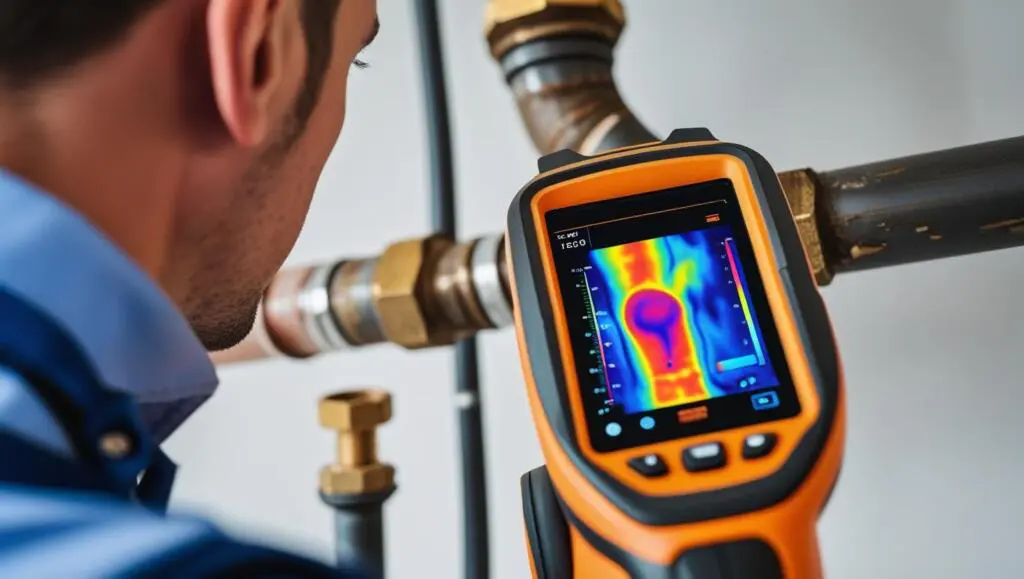
Thermal imaging cameras are another scientific invention being used to find leaks. These devices can detect temperature differences on the surface, which could indicate a smattering of moisture hiding within somewhere. When water penetrates under floors or behind walls, it can alter the temperature of the surrounding area.
Professionals can see inside without ever opening it; the infrared cameras turn these temperature changes into photos. This technique does not cause any harm this is very helpful for locating leaks in complex structures where conventional inspection techniques may fail.
Moisture Metres And Sensors
Tools that detect moisture are a must-have for clearing up leaks that aren’t immediately apparent. Moisture metres measure the amount of water in materials including wood, concrete and drywall. High moisture levels are usually an indication of some sort of concealed leak.
Advanced sensors may also be installed in key districts to monitor moisture and humidity levels over time. The real-time data collected by these sensors can help plumbers detect leaks before some serious damage has occurred. This pre-emptive measure is one of the best features of modern leak detection devices.
Testing For Pressure And Flow
Another aspect of scientific leak detection involves evaluating the water pressure and flow in a plumbing system. Pressure testing identifies where water could escape the system. If the pressure dropped suddenly, it typically indicates a leak.
Flow analysis takes it a step further: tracking how water flows through pipes. We can also detect leaks or clogs by checking if the flow patterns are strange. Cross-referencing pressure data with flow measurements means professionals can pinpoint exactly where the issues lie without having to guess.
Checking The CCTV Pipes
CCTV inspection is an innovative technique that revolutionised leak interpretation. Insert small, weatherproof cameras into pipes and obtain a live feed showing you inside of them. This tech allows plumbers to track leaks, corrosion, and damage–and it can do so with pinpoint precision.
While visual data collected with CCTV cameras can help you make smart decisions about repairs, it also saves time and money because it eliminates the need for invasive testing.
What Technology And Expertise Do
Technology is important, but the skill of the person using it has an impact on leak detection as well. The leading plumber in Sydney uses state-of-the-art tools and technology to deliver accurate results. You have to know how to view data from multiple devices in order to locate the source of a leak and find the right solution.
This multi-technology process is the basis of modern leak detection for maximum efficacy. With this careful process, even the most challenging leaks can be identified and fixed.
Conclusion
The plumbing business has been transformed by the research that goes into modern leak detecting technologies. These professionals are using advanced methods such as acoustic sensors, thermal imaging, moisture detection, pressure analysis and CCTV inspections to detect leaks with incredible precision. These advances have rendered the procedure quicker, more efficient and infinitely less disruptive than traditional methods.
The tools and techniques for maintaining plumbing systems will change as well. Latest methods ensure leaks will be detected and repaired early, securing your property and giving you piece of mind when hiring a top plumber in Sydney who knows how to use these new methods.